
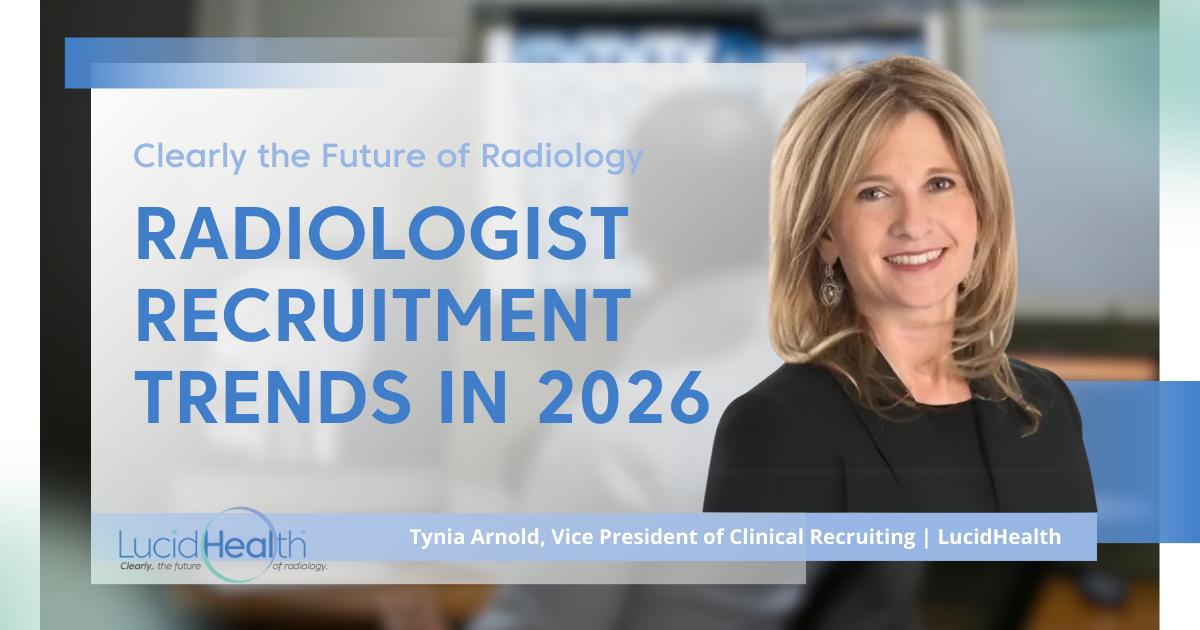
By Tynia Arnold, Vice President of Clinical Recruitment for LucidHealth
Connect with Tynia Arnold on LinkedIn
As we enter 2026, the radiology job market remains highly competitive and full of opportunity. Physician demand continues to outpace supply across most subspecialties, and radiologist recruiting strategies are evolving rapidly. From the expansion of remote radiology jobs to more complex compensation models, today’s market looks very different than it did just a few years ago.
Based on national recruiting data and direct conversations with practicing radiologists, along with residents, and fellows entering the field post-training, here are the key physician recruiting trends shaping radiology in 2026—and what radiologists at every career stage should know.
Remote Radiology Jobs Have Become a Mainstream Career Path
Remote radiology opportunities are no longer a temporary solution or limited to overnight coverage. In 2026, remote jobs are a permanent and growing segment of the physician workforce.
Subspecialties such as neuroradiology, body imaging, MSK, and emergency radiology are increasingly well-suited for remote practice, supported by advanced PACS systems, secure networks, and standardized workflows.
Why remote radiology continues to grow:
- Persistent nationwide radiologist shortages
- Increased physician demand for work-life balance and geographic flexibility
- Proven quality and efficiency in teleradiology and hybrid care models
For radiologists, remote roles provide flexibility without sacrificing case complexity or career advancement. For practices, they allow access to a broader talent pool and improved coverage continuity.
Key considerations when evaluating remote radiology positions:
- Productivity expectations and turnaround time standards
- Licensing, credentialing, and malpractice support
- Integration with on-site teams and leadership
Remote work is no longer an alternative—it’s a core recruiting strategy in modern radiology.
Radiologist Compensation Trends in 2026
Radiologist compensation in 2026 reflects continued demand, but pay structures are becoming more nuanced. Instead of one-size-fits-all salaries, practices are offering compensation models tailored to work modality, subspecialty, and schedule.
Current compensation trends include:
- Hybrid compensation models combining salary and RVU-based incentives
- Premium pay for evening, overnight, and weekend shifts
- Greater transparency around productivity benchmarks
Radiologists are also placing increased emphasis on total compensation, including benefits, flexibility, and long-term earning potential—not just starting salary.
Advice when reviewing compensation packages:
- Understand how productivity is measured and supported
- Ask how compensation evolves beyond year one
- Evaluate benefits, scheduling flexibility, and burnout prevention
A well-structured compensation model should support both physician satisfaction and long-term practice sustainability.
Flexibility Is a Key Driver of Radiologist Recruitment and Retention
In today’s recruiting environment, flexibility is one of the most powerful tools for attracting and retaining radiologists. Positions offering adaptable schedules consistently outperform those relying solely on higher compensation.
Practicing physicians considering a major schedule shift in 2026 should consider new positions that offer:
- Remote or hybrid work options
- Part-time or reduced FTE opportunities
- Job-sharing or phased retirement models
Radiologists increasingly prioritize roles that align with personal and family needs, and practices that recognize these roles are better positioned to succeed in a competitive hiring landscape.
Career Advice for Radiology Residents and Fellows Entering the Workforce
For radiology residents and fellows completing training in 2026 and 2027, the job market is strong—but navigating it requires careful planning.
Key advice for new radiologists:
- Start early - engage with physician recruiters 12-18 months in advance
- Ask detailed questions about workload, staffing, and support
- Remain open to hybrid radiology roles
- Consider mentorship, leadership access, and long-term professional growth opportunities
Your first job after residency or fellowship sets an important foundation. Prioritize roles that offer transparency, stability, and professional development—not just high compensation.
Looking Ahead: The Future of Radiology Recruiting
Radiology recruiting in 2026 is defined by flexibility, innovation, and sustained demand for high-quality physicians. While onsite radiologists are always in demand, remote radiology jobs are here to stay and as compensation models continue to evolve, physician leaders are re-examining how practices recruit and retain talent.
For radiologists, success in this market comes from informed decision-making and alignment with the right practice. For recruiting leaders, it means building roles that support both clinical excellence and physician well-being.
The future of radiology depends on thoughtful partnerships—and that starts with understanding today’s recruiting trends.
Ready to join a physician-led radiology practice committed to innovation and work-life balance?
Explore our open Radiologist positions with our practices across the US.
Meet Tynia Arnold, Vice President of Clinical Recruiting for LucidHealth
With more than 25 years in clinical workforce and resource management, Tynia Arnold leads the physician recruiting team for LucidHealth and its network of practices. Recruiting top radiologists for sub-specialized roles across the US, she builds and strengthens LucidHealth's physician team of more than 300+ radiologists. She is located in Detroit, Michigan.
.png)